أم القرى... عراق الكرك
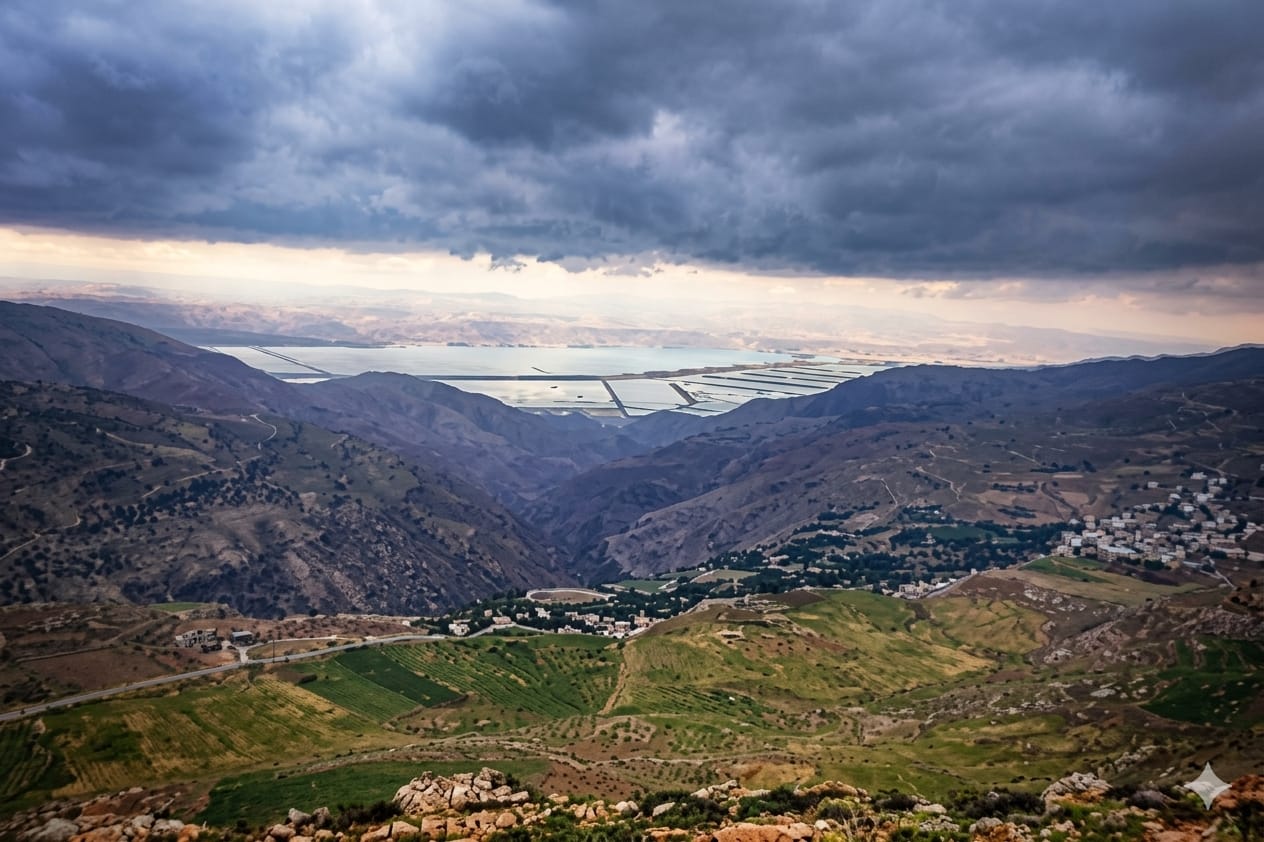
The moment you started your trip to Iraq a great solemn rhythm touches your soul down to that village, it feels like you are driving uphill but you actually going down the valley.
Until one reaches the springs that flow gently with the bones of those who perished in this place before more than ninety years ago.
Over there, after the exhaustion you suffered to reach Iraq village in Karak and start a new magical novel, with a real characters, events and details…all these elements of the novel are set in that village, surrounded by three mountains like a small version of Interlaken town, while the only access point is when you see over there..to the west Yes! It is the dead sea!!
Iraq village whose name came from (Tar Ain), which in Aramaic means the place of water… actually one of the springs of the village still holds that name (Ain Tar’in), also in the old historical writing in which the village was mentioned; it was in the mosaic map as it was mentioned as Taryas, then and after the Muslim conquest its name had changed into Iraq, as a bit quick information; dictionaries indicate that Iraq means a place with a lot oftrees and water or the place with lots of water or place close to the shores. All these meanings corresponds to the geographical reality of the village.
بلدية العراق
About the Landmark
Archaeological Sites
The moment you started your trip to Iraq a great solemn rhythm touches your soul down to that village, it feels like you are driving uphill but you actually going down the valley.
Until one reaches the springs that flow gently with the bones of those who perished in this place before more than ninety years ago.
Over there, after the exhaustion you suffered to reach Iraq village in Karak and start a new magical novel, with a real characters, events and details…all these elements of the novel are set in that village, surrounded by three mountains like a small version of Interlaken town, while the only access point is when you see over there..to the west Yes! It is the dead sea!!
Iraq village whose name came from (Tar Ain), which in Aramaic means the place of water… actually one of the springs of the village still holds that name (Ain Tar’in), also in the old historical writing in which the village was mentioned; it was in the mosaic map as it was mentioned as Taryas, then and after the Muslim conquest its name had changed into Iraq, as a bit quick information; dictionaries indicate that Iraq means a place with a lot oftrees and water or the place with lots of water or place close to the shores. All these meanings corresponds to the geographical reality of the village.
Villages Mother
But the town people and the residents have other reference in addition to “Iraq” name, they refer to it as “Mother of martyrs”, you might wonder why martyrs ? Well it is because of the large number of Martyrs they died in ancient and modern wars. Sometimes they call it the “Mother of villages” because it is one of the oldest but still alive with inhabitant villages in Jordan, that’s explains why it has lots of the ancient ruins that reflect the continuous human presence through ages. Such as khirbet Zabda or Zabda ruins, khirbet Mashraqa, khirbet Sayyad, khirbet al- Quragr, khirbet Umm al-Novar, khirbet Sabra, khirbet al-Balida.
You might also see the tombs carved into the Negev caves above Wadi-shahwan in the village and Hunter caves( Sayyad caves) in southern Iraq.
As well as what really witness the depth of its history is the temple site, located in Umm al-Sawaqi area North of Ain al-Qala’a. Despite the destruction of it and the mosaic pieces, the remains of the entrance, which is the three rectangular pillars indicates that there is antiquities not yet been discovered.
Near to this site there is the mills, three old buildings constructed during the ottoman era, these were grain mills, you can imagine when water falling from Ain Qala’a ( Qala’a spring) that to make it powered by the flow of the water.
And in addition to it, there are lots of water spring that water the plants of Iraq, which are:
Ain Tar'in, Ain Ma' al-Muqabbiyah, Ain Ma' al-Maghsil, Ain al-'Assi, Ain al-Bayda, Ain al-Fawwara, Ain Sabra, Ain Umm al-Mays, Ain Aw'ila, Ain al-'Amud, Ain al-Balida, Ain al-Hisha, Ain Shahwan.
Travelers Talking
Books of travelers and orientalists tells us that the Swiss traveler Burckhardt passed through it and wrote in his memoir on August 5, 1812 AD: “We left Kathraba early morning , and our way was through a barren, rocky area intersected by several valley, we arrived “Iraq” village, that look like Kathraba in which it has the same size and built on a base of rocks stand upright, some of these rocks have rolled and rolled to finally settled among the village houses. And of course in addition to wheat; the villagers cultivate barley, olives, figs and tobacco…we spent in the shade of a huge carob tree”
As the German traveler Oppenheim also wrote about it in the second part of his book “with Bedouins” telling us some of the details about villages clans which are two groups; first one is Al- Mawajdeh clan, living in the upper part of the town while the second are: Al-Harazneh, and Al- Marabhah, living in the lower part of Iraq. He also counted the population of each clan and the number of riflemen there.
Peter Gubser, in his book also tell us about Iraq in his book “Politics and change in Karak” he wrote about Iraq and neighboring villages “ In the nineteenth century, there were four permanent locations: The town of Karak and the villages of Kathraba, Iraq, and Khinzirah (Taibeh nowadays), these three villages are now in the outskirts of the region and inhabited by tribes with a deep roots in Al-Karak.”
When you take a look at Khiar al- Din al- Zarkali book” Two years in Amman” he says about Iraq:” Al Iraq: one of the villages belonged to Kathraba district. In 1326 AH, people of this village were the first who attack Turkish forces, killed district director, the officer, and twenty soldiers were overthrown and killed. This attack make the Turks use force against them to the point that they killed more than seventy of the inhabitants of Iraq village. Most of them are Al Mawajdeh tribe. Also during the time of Faisal government they refused pay taxes until The commander of the Karak force Zaki Bek, was forced to launch a mountain missile at them.”
Tharias
There are lots of travelers and researcher’s observations about Iraq and its antiquities and the Importance of its location.
In addition of what we mentioned of travelers there are also the traveler Musil visited Iraq in 1907 and Gluck in 1930.
Musil mentioned the importance of “Tar Ean” region linking it with Tharias site, which was found on the Madaba mosaic map. As well as it was mentioned also by the traveler Allt in 1937. However the traveler Deorand considered this place as “That Ras” region southern Karak governorate, but this consideration was unlikely to be true because it contradicts the geographical distance of the site on the Map.
As a result there is no doubt that the archaeological site of Tharias which represents a very important church site during the mid- sixth century AD, which it does not extend the western borders of Iraq town.
Landmark Photos
Click any image to update the main preview, or open it full size.
أم القرى... عراق الكرك
Click image to enlarge
Gallery images
Scroll horizontally to view all photos
Location on Google Maps
بلدية العراق
Related Places
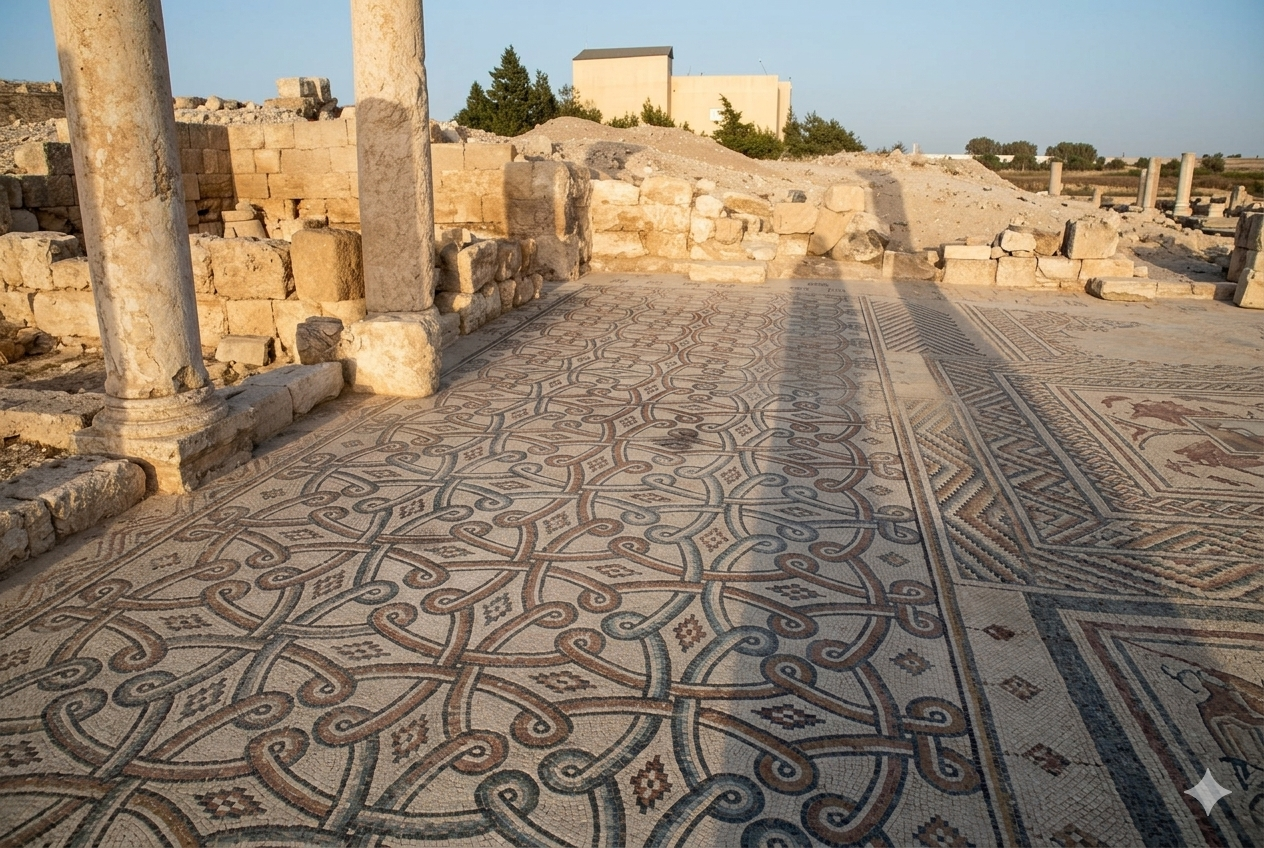
Mutah Byzantine Church
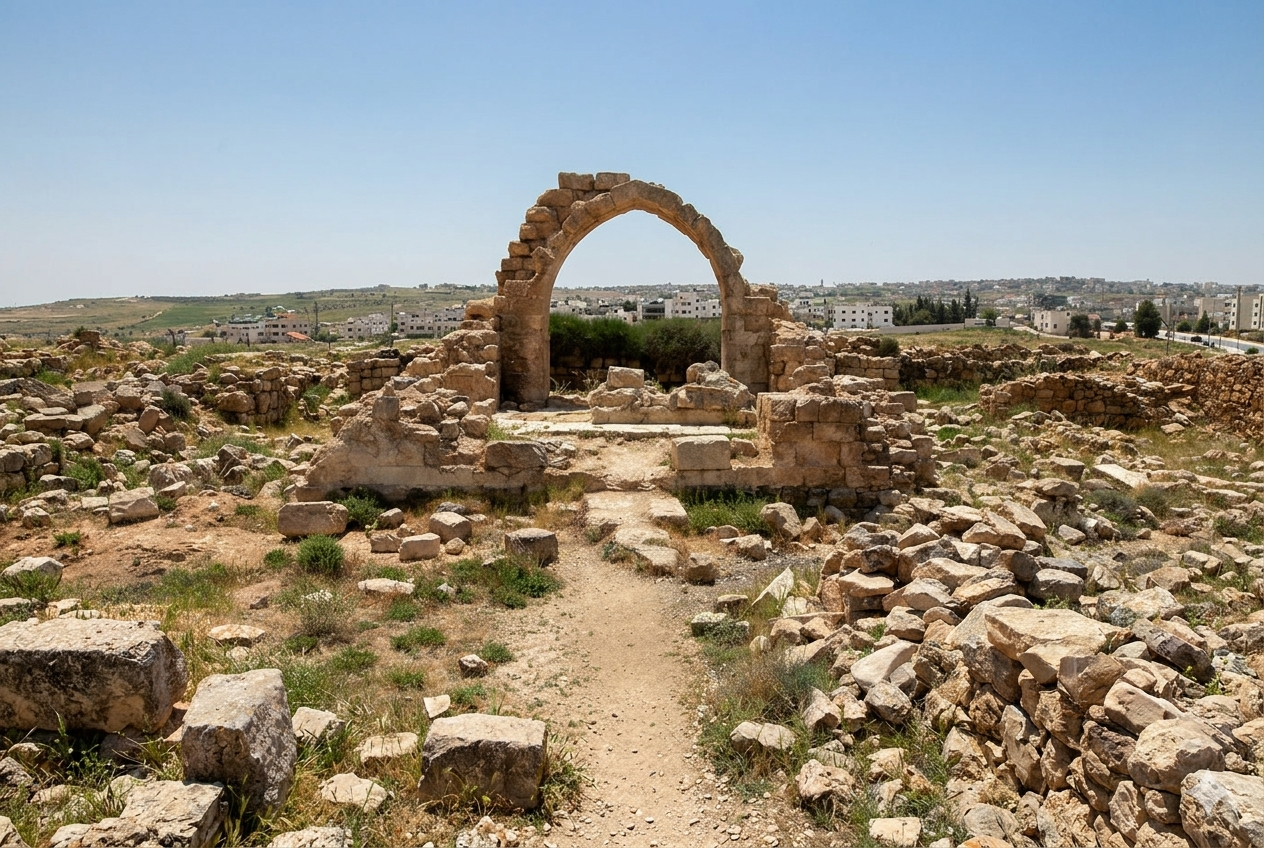
Battle of Mu’tah Site
Standing on the land where one of the greatest battles in Islamic history took place, the Battle of Mu’tah Site blends the spirit of courage and sacrifice with the peaceful atmosphere of Al-Karak, offering visitors a truly unforgettable experience.
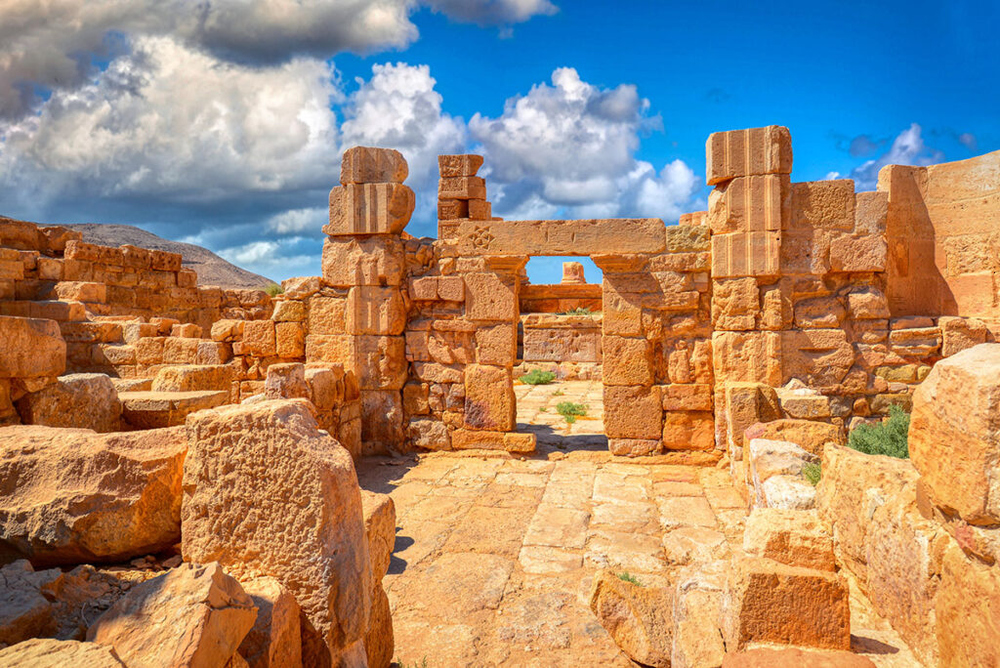
Khirbet Al-Dharih — The Hidden Nabataean City of Karak
بين جبال الكرك الهادئة تختبئ خربة الذريح كواحدة من أجمل المدن النبطية القديمة في الأردن، حيث تمتزج المعابد والطرق الحجرية والنقوش التاريخية بأجواءٍ مليئة بالغموض وسحر الحضارات القديمة
Add this landmark to your trip plan
Use the smart trip planner to design the perfect Karak tour